Loading...
Serving Hollister, CA and surrounding areas. (831) 245-4724
Your parking lot is the first thing customers drive across and the last thing they remember. We install commercial asphalt surfaces in Hollister built for the local clay soils, the seismic conditions, and the business you need to keep running during construction.
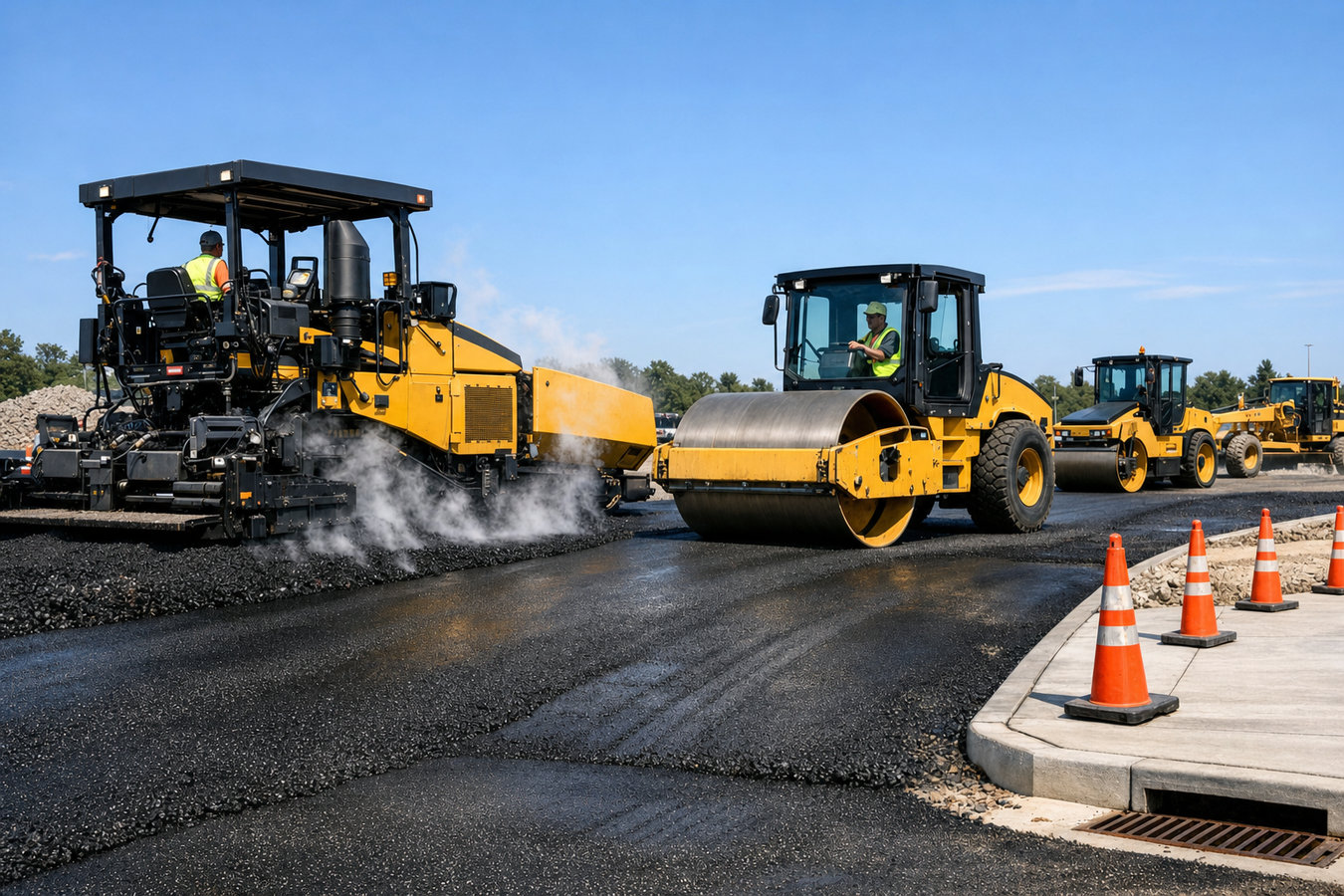
Commercial asphalt paving in Hollister, CA means removing the old surface if needed, grading and compacting the base material to correct drainage, and laying fresh hot-mix asphalt in one or more passes - most standard commercial parking lots are paved in one to three days on site, with vehicles back on the surface within 24 to 48 hours after the crew finishes.
For Hollister businesses, the difference between a lot that lasts 20 years and one that starts failing in five is almost always the base. The San Benito Valley's clay soils expand in the rainy season and contract through the long dry summer, and the Calaveras Fault adds ongoing low-level ground movement to the picture. A commercial lot that does not account for those conditions - with a base designed to drain and flex - will show it quickly. That is why we spend real time on site assessment and base preparation before the first load of hot-mix arrives.
If your lot is structurally sound but worn on top, you may not need a full tear-out - a parking lot paving overlay or resurfacing may be the more cost-effective path. We will look at both options and give you an honest comparison.
When cracks spread across large sections of your lot - especially the spiderweb pattern called alligator cracking - the surface has broken down beyond what patching can fix. Crumbling edges are another sign the base has weakened. At this stage, resurfacing or full replacement will cost less over time than continued patching.
Standing water on your lot after Hollister's winter rains signals the surface has lost its proper slope or drainage has been compromised. Water that sits on asphalt works into cracks, softens the base, and accelerates deterioration. Repaving with correct grading fixes the drainage problem at the source.
After years of Hollister's intense summer heat and UV exposure, asphalt turns gray and brittle. Fine surface cracks appear, and the pavement becomes more vulnerable to rain and traffic. If the base is still sound, resurfacing at this stage is a cost-effective way to restore the lot before deeper damage sets in.
A single pothole can be patched. Multiple potholes across a lot usually signal that the base has failed in several areas - often where water has been infiltrating for a long time, compounded by the ongoing ground movement common in this part of California. Multiple potholes typically mean a more comprehensive repair is overdue.
We handle the full scope of commercial paving work - new parking lot installation, full tear-out and replacement for lots where the base has failed, and overlay resurfacing for surfaces that are structurally sound but worn. Every job starts with a site visit to assess the existing surface, measure the area, and evaluate the base and drainage. That assessment drives the scope, and we walk you through what we found and why we recommend what we do before you commit to anything.
Once paving is complete, we follow up with striping and marking so your lot is ready for use. For ongoing care, we recommend coordinating regular parking lot maintenance and periodic sealcoating to protect your investment. For businesses that need individual sections addressed without full repaving, targeted parking lot paving repair is also available.
Right for businesses constructing a new parking area from scratch - base grading, drainage planning, and full asphalt installation in one coordinated scope.
Best for lots where the base has failed in multiple areas and patching is no longer cost-effective - everything comes out and a properly built surface goes back in.
For lots with a structurally sound base but a worn or oxidized surface - the top layer is milled or prepared and fresh asphalt is applied over the existing base.
Designed for active businesses that cannot close their full property - the crew paves one section at a time while the rest remains accessible to customers and employees.
Hollister sits directly along the Calaveras Fault - one of the most seismically active corridors in California - and the slow, ongoing ground creep in this area stresses pavement surfaces over time in ways that have nothing to do with traffic load or installation quality. Add to that the San Benito Valley's expansive clay soils, which swell every winter and shrink every summer, and you have ground conditions that demand a base designed to flex and drain, not just support load. The long, hot, dry summers here also accelerate the oxidation of asphalt, meaning regular maintenance matters more in Hollister than in cooler coastal climates.
Hollister's commercial growth along the Highway 156 corridor has added a significant number of newer lots that are now old enough to need serious attention after years of traffic and seasonal stress. We work with business owners across Hollister and the wider region, including Watsonville, and we understand the specific grading, drainage, and base requirements that make commercial paving work in this part of California.
We visit your property to assess the existing surface, measure the area, and evaluate the base and drainage. We ask about your business needs - including whether the lot needs to stay partially open - and provide a written estimate that spells out the full scope. We respond to initial inquiries within 1 business day.
If your project requires a permit - for example, a new driveway approach or drainage changes near a public street - we handle that application before scheduling the crew. Permit timelines vary, so asking about this early in the process avoids schedule surprises. Once permits are cleared and a start date is set, we confirm the phasing plan in writing.
On the first day, the crew removes the existing surface if a full replacement is planned, then grades and compacts the base. This is the most critical phase of the job. Drainage corrections and additional base material go in here. You may see heavy equipment - excavators, graders, and compactors - on site during this phase.
Once the base is ready, hot-mix asphalt is laid and compacted. Most commercial lots are paved in a single day. Vehicles stay off the new surface for at least 24 to 48 hours. After curing, striping is applied and we do a final walkthrough with you to confirm the work matches the agreed scope.
We walk the site, assess the base, and give you a clear scope - no pressure, no guesswork.
(831) 245-4724The most expensive mistake in commercial paving is rushing the base. We do not schedule the paving crew until the base work is done correctly - graded, compacted, and draining as designed. That is what separates a lot that lasts from one that needs major work within a few years.
We build commercial bases to account for the San Benito Valley's clay soil shrink-swell cycle and the ongoing fault creep along the Calaveras system. A contractor who treats Hollister like any other California city is going to give you a lot that underperforms those conditions from the start.
We have completed phased commercial paving projects across the Hollister area where the business stayed open throughout. That experience means we know how to set up traffic flow, communicate the daily schedule to your staff, and execute each phase cleanly without leaving your customers without parking.
California commercial paving work requires a current state contractor's license - verifiable online through the California Contractors State License Board. We carry the required licensing and insurance, and we know which San Benito County projects need permits before work begins so your project does not stall mid-process.
A well-built commercial lot is an investment that pays back in reduced maintenance costs, better first impressions, and fewer liability concerns from cracked or potholed surfaces. We build them to last in Hollister's specific conditions - not just on paper. The National Asphalt Pavement Association publishes commercial paving standards and best practices that guide how quality work in this industry should be done.
After your commercial lot is paved, a regular maintenance program - crack sealing, sealcoating, and re-striping - keeps it in top condition and extends the time before the next major resurfacing.
Learn MoreFor targeted paving repairs to specific sections of an existing commercial lot, without the scope or cost of a full tear-out and replacement.
Learn MoreHollister paving crews book fast once the dry season arrives - get on the schedule now and avoid waiting until fall.