
Loading...
Serving Hollister, CA and surrounding areas. (831) 245-4724
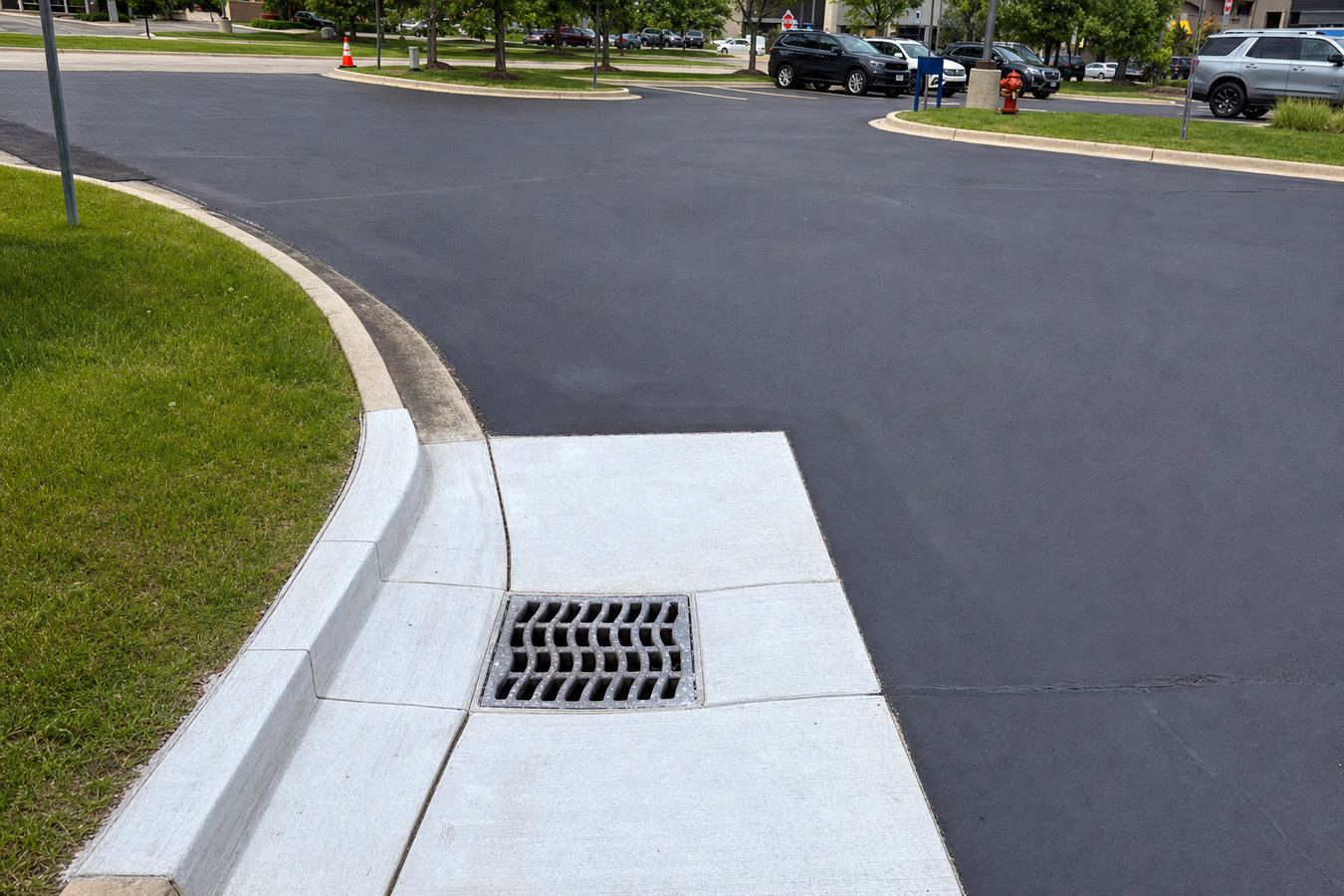
If water pools on your driveway or runs toward your home after every rain, your pavement is at risk - we install the right drainage fix before the damage gets worse.
Drainage solutions in Hollister move water away from your driveway or paved area through regrading, channel drains, catch basins, or French drains, with most residential projects completed in one to two days.
Hollister sits on clay-heavy soil that swells when wet and shrinks when dry, and that movement is what cracks pavement season after season. If you are tired of patching the same spots every spring, water under the surface - not wear on top - is almost certainly the cause. A proper drainage fix addresses the root problem, so the repairs stop coming back. Many homeowners pair drainage work with grading and excavation when the slope of the lot needs correction along with a new drain system.
Left unaddressed, standing water softens the base layer beneath your asphalt, accelerating cracks, sinkholes, and edge crumbling. The good news is that drainage problems caught before full base failure are far cheaper to fix than waiting until the whole driveway needs replacement.
Water that collects in the same low areas after every rain means the surface is not draining correctly. In Hollister, where heavy winter rains follow a long dry season, those puddles grow quickly and start softening the asphalt base beneath them.
If you repair a crack and it comes back within a season or two, water is almost certainly the cause. The clay soils in the San Benito Valley swell and shift when wet, and if water is not draining away, the ground movement never stops - and neither does the damage.
If rain or irrigation water flows toward your foundation rather than away from it, your paved surface may be graded in the wrong direction. This is a drainage problem that a paving contractor can correct by regrading the surface or adding a drain at the low point before water reaches your structure.
Soil washing away from the sides of your driveway after a rain is a sign that runoff is not being controlled. Left alone, this erosion undercuts the pavement edge, which eventually causes cracking and crumbling along the sides of the driveway.
Every drainage project starts with a site assessment to understand where water enters, where it needs to go, and what is preventing it from getting there. The simplest fix - regrading the surface so it slopes away from your home - works well when the slope is off but there is no major excavation needed. When water volume is high or the outlet is far away, we install channel drains, catch basins, or French drains alongside the paved area. We also handle speed bump installation on the same visit when clients are already refreshing their driveway layout.
Whatever the solution, we repair the disturbed asphalt after drain installation so your driveway looks finished - not patched. Hollister properties vary widely in grade and soil depth, so we build each system around your specific lot rather than using a one-size-fits-all approach. That attention to local conditions is what keeps the system working through multiple wet seasons, not just on the day it is installed.
Best for driveways where the slope has shifted over time and water now flows toward the structure instead of away from it.
Best for sloped driveways where water runs down the full length - a trench drain across the low end intercepts the flow before it reaches the garage or street.
Best for large paved areas or low spots where volume is high - a basin collects water and routes it underground to a safe outlet.
Best for driveways bordered by soil that soaks up and releases water slowly - a perforated pipe trench intercepts groundwater before it reaches the base.
The Hollister Valley sits on expansive clay soils that swell when saturated and shrink as they dry out every summer. This repeated movement is the single biggest reason asphalt cracks and shifts here - and it makes proper drainage especially critical. Water that lingers in the soil amplifies the swelling cycle. A drainage system that removes water quickly reduces how much the soil moves under your pavement, which is the most direct way to extend your driveway's life. Homes in Hollister built during the 1990s and 2000s are now old enough that original drainage grades have settled, making this issue increasingly common across the city.
The Calaveras Fault runs through this area, and even slow seismic creep can shift drain pipes and open gaps in pavement over time. We use flexible pipe connections and compacted bases designed to tolerate that movement without failing. The wet season here typically arrives fast after a long dry fall - property owners in San Juan Bautista and the surrounding valley face the same clay-soil drainage challenges, and late summer is the best window to get ahead of it. California also has stormwater rules limiting where drainage can be directed, and we handle permit coordination when connections to public systems are involved. EPA stormwater guidelines and CSLB contractor licensing requirements apply to drainage work that affects public rights-of-way.
Call or message us to describe where water collects and how long it sits. We respond within 1 business day and schedule a site visit at no charge to walk the property.
We walk your lot, observe slope and drainage patterns, and put together a written estimate that explains exactly what we recommend and why - no verbal quotes only.
If the drain connects to a public system, we determine whether a permit is needed and file on your behalf. We give you a realistic permit timeline before scheduling the work.
The crew excavates, installs drain components, compacts the base, and patches the disturbed asphalt. Most residential jobs wrap up in one to two days - plan to keep vehicles off the repaired area for at least 24 hours.
No pressure, no obligation - we walk your property, show you exactly where the problem is, and give you a clear written quote.
(831) 245-4724We know the expansive clay soils and seismic conditions of the San Benito Valley, and every drainage system we install accounts for that seasonal shrink-swell cycle. A contractor unfamiliar with local soil behavior can install a technically correct drain that still fails within two or three wet seasons.
We put the drainage plan, materials, and warranty in writing before work begins - you have a clear record of what was promised and recourse if something is not right after the job is done. Verbal quotes alone leave too much room for surprise add-ons at the end.
When a drain connects to a public curb or storm system, we handle the permit application with the local public works office on your behalf. You do not have to navigate that process alone or risk starting work without the right approvals in place.
California requires paving contractors to hold a state-issued license before doing this type of work. You can verify any contractor license status at cslb.ca.gov before signing anything - and we encourage you to do exactly that.
Drainage is one of those jobs where local knowledge matters as much as technical skill. The combination of clay soils, seismic activity, and Mediterranean rainfall patterns in the Hollister area creates conditions that a contractor from outside the region may not anticipate - and that difference shows up in how long the system holds.
Add a physical traffic-calming feature to your driveway or private road while your crew is already on site.
Learn MoreCorrect the underlying slope of your lot so water moves away from your home from the ground up.
Learn MoreHollister's wet winters arrive fast after a long dry fall - call now while the ground is still workable and we can get your system in place before the first storm.